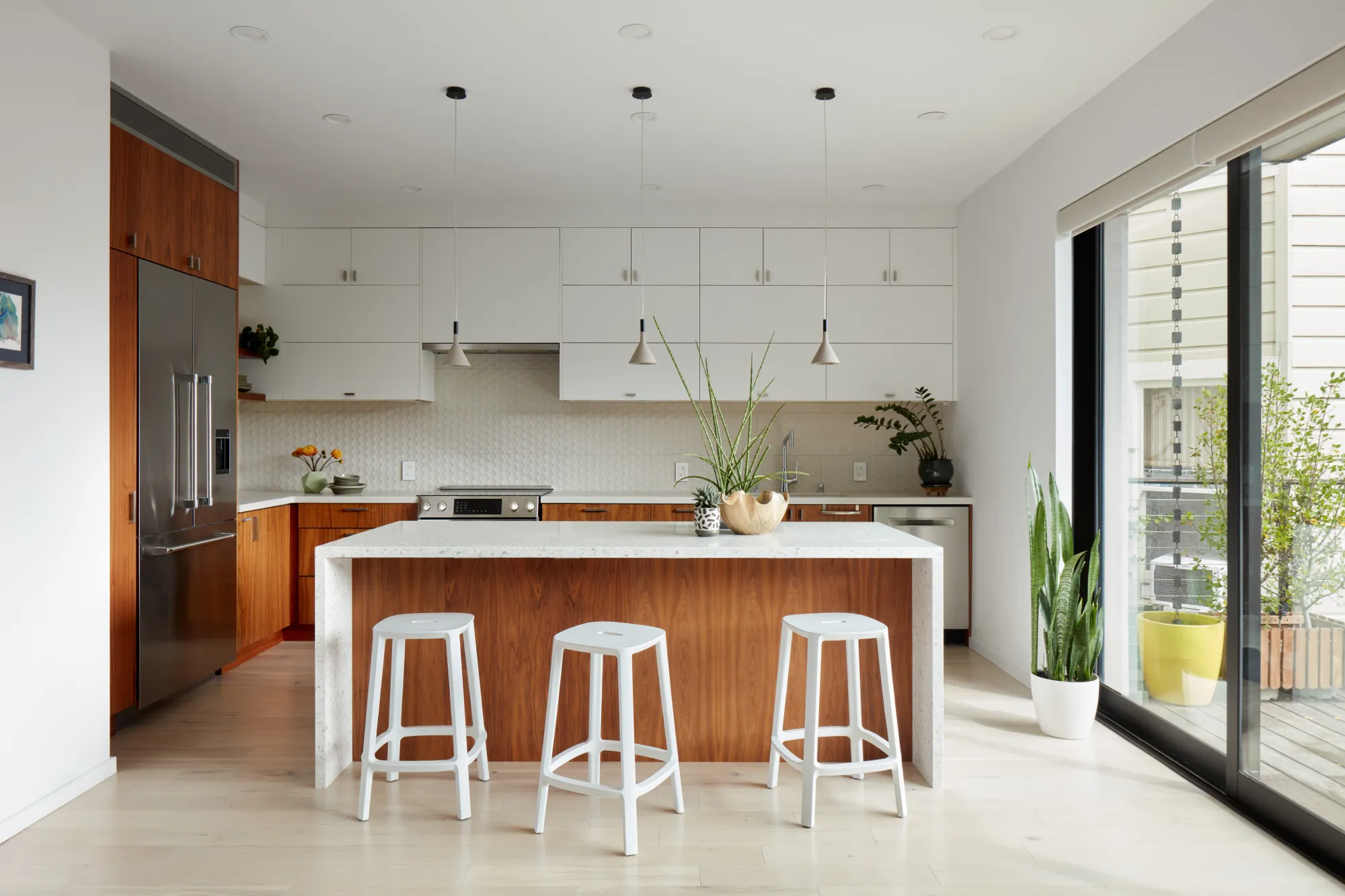
Before choosing walnut kitchen cabinets, compare the grain, the color variation, the door construction and the finish. Mod Cabinetry helps homeowners review each of those choices. Its senior designers have 10+ years of kitchen design experience, and its master designers have 20+ years. Walnut veneer is available in the Plus collection.
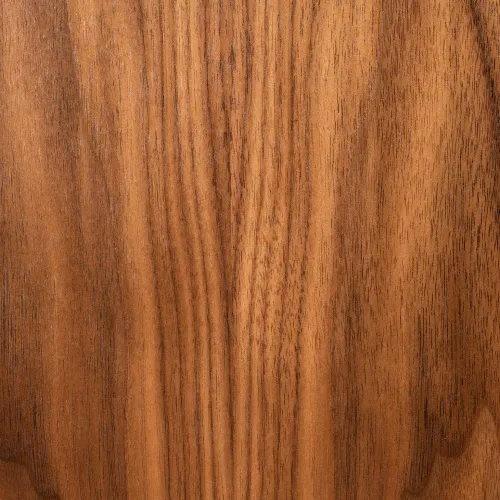
Walnut can vary noticeably in color and grain, even across a single slab cabinet door.
That variation comes from the wood itself. According to the American Hardwood Export Council, walnut has pale sapwood and brown heartwood, and its grain can be straight, wavy or curly.
You may like the darker parts of a sample and feel less sure about a pale streak. Show both to your Mod Cabinetry designer so they understand the look you want. Look at several examples before deciding whether you want that contrast across a whole kitchen.
Walnut veneer is a thin layer of walnut applied to a core that supports the door. The walnut is the part you see.
A cabinet described as walnut may use different materials for the doors, box and drawer interiors, so the name alone doesn’t tell you what each part is made of.
MDF, short for medium-density fiberboard, is one possible core. Its smooth surface works as a base for wood veneer, according to Columbia Forest Products’ MDF specifications. The core used in your cabinets depends on the collection and door you choose.
Your quote should make these parts clear:
Look at how the grain runs across neighboring doors and drawers, as well as on each front.
A sample shows only a small piece of the wood. On a full wall of cabinets, the direction and layout of the grain also change how it looks. Examples of finished cabinets can help you explain whether you like horizontal grain, vertical grain or a particular matching pattern.
You may hear the term book matching. In the Architectural Woodwork Institute glossary, it means turning over every other veneer sheet so the grain forms a mirrored pattern. Your designer can explain whether book matching is available for your chosen cabinets and which doors and drawers it would cover.
If an inspiration photo shows the grain running across several drawers, point that out to your designer. Discuss that detail before you assume your cabinets will look the same.
Compare walnut with your countertop and flooring samples under the lighting you expect to use in the kitchen.
A door sample lets you hold the wood next to the other materials in the room. It can also help you decide how much walnut you want, whether throughout the kitchen or on one group of cabinets. Your designer can price the combinations you’re considering.
Mod Cabinetry’s Plus collection includes walnut veneer finishes, and you can look at the available door and finish combinations in person at the Berkeley studio.
Compare walnut samples in person
Bring your countertop and flooring samples to the Berkeley studio and see them next to the available cabinet finishes.
Start with the wood choice when an all-walnut kitchen costs more than you want to spend.
Changing the material can make a big difference to the estimate. Drawers, rollouts and accessories also add to the total. Tell your designer which storage features you use most so they know what to keep as you look at changes.
You might choose another wood or use a different mix of finishes. How much you save depends on your layout and materials, so your designer will need to price each option for your kitchen.
If you already have drawings, start with the guide to getting a quote from kitchen plans.
Mod Cabinetry serves San Francisco homeowners from its Berkeley studio and offers walnut veneer through its Plus collection.
The team can help you choose from the available doors and finishes and plan the cabinets for your room. Before production, a senior designer checks every cabinet order against your plans.
Before you order, use the guide to reviewing cabinet orders to check that the written specifications match your choices.
Choose the walnut finish for your kitchen
Meet with Mod Cabinetry to look at walnut samples and talk through the look and budget you have in mind.
To get a price for walnut cabinets based on your plans, request a free estimate.
No. A stain is a finish color, and walnut is a wood species. Ask for the wood species and the finish name separately so you know what the cabinet fronts are made of.
Not automatically. Interior finish options depend on the collection you choose. Ask your designer whether a matching walnut interior is available and how it would affect the price. If you often leave the doors open, consider how the interior will look alongside the cabinet fronts.
Mod Cabinetry’s Plus collection includes walnut veneer and offers Shaker, Slim Shaker and Slab door styles. Check with your designer which walnut finish and door style combinations are available before you choose.
Mod Cabinetry’s Ultimo collection offers a flat sheen that can make finished wood look almost unfinished. Ask your designer whether that sheen is available with walnut and review a sample before choosing.
Crystal Collins is an owner and Design Director at Mod Cabinetry in Berkeley, with 25+ years of kitchen design experience. She established the business’s kitchen design department before becoming an owner. Today, she helps homeowners work through kitchen layouts, cabinet choices and material selections.